Developing a successful beverage involves more than selecting an appealing flavor. Flavor concentrates can improve beverage formulation by giving manufacturers flexibility to create, refine, and differentiate flavor profiles across many applications.
From sparkling drinks and flavored waters to energy, functional, dairy, and plant-based beverages, each formula presents unique sensory challenges. Sweeteners, acids, botanicals, vitamins, minerals, proteins, and other ingredients can all affect taste and aroma.
Why Flavor Is So Important in Beverage Formulation
Flavor shapes how consumers experience a beverage. Taste and aroma interact with sweetness, acidity, mouthfeel, carbonation, temperature, and other sensory elements to define the finished product.
Even small changes can affect this balance. A fruit flavor may perform differently in an acidic sparkling drink than in a creamy dairy or plant-based beverage, while sweetener systems can alter how specific notes are perceived. For this reason, flavor must be evaluated within the complete formulation.
How Flavor Concentrates Can Improve Beverage Formulation
Flavor concentrates for beverage formulation allow developers to adjust flavor profiles without relying solely on large amounts of traditional flavoring ingredients. They support testing of different profiles, intensities, combinations, and interactions with acids, sweeteners, and functional ingredients.
They can also complement existing ingredients. A fruit concentrate may reinforce a fruit-based drink, while vanilla, caramel, chocolate, or creamy notes can create more distinctive dessert-inspired beverages. Flavor becomes part of the overall product development strategy rather than an isolated ingredient.
Creating More Consistent Flavor Profiles
Consistency is essential in commercial beverage production. Consumers expect a familiar experience, but ingredients can vary due to seasonality, origin, processing, and storage. Fruit-derived ingredients, for example, may differ in sweetness, acidity, aroma, and intensity.
Flavor concentrates give formulators another tool to develop, evaluate, and adjust a controlled flavor profile—helping create a recognizable product while respecting the characteristics of the full formulation.
Exploring Different Flavor Profiles for Beverages
Fruit, Citrus, and Tropical Flavors
Strawberry, raspberry, blueberry, peach, watermelon, apple, lemon, lime, orange, grapefruit, mango, pineapple, passion fruit, and coconut can support a broad range of beverage concepts.
These profiles can be used individually or combined to create refreshing, familiar, or more distinctive products. Combinations such as strawberry lemonade, mango-passion fruit, raspberry-lime, and peach tea can help brands create a recognizable flavor identity.
Dessert and Creamy Flavors
Vanilla, caramel, chocolate, cream, and other dessert-inspired profiles can support richer, indulgent beverage concepts. They may be explored in coffees, shakes, dairy and plant-based drinks, protein beverages, and other specialty applications.
Flavor Concentrates for Functional Beverages
Functional beverages may include vitamins, minerals, proteins, botanical extracts, electrolytes, or amino acids. Depending on the formula, these ingredients can introduce bitterness, acidity, earthy notes, or other sensory challenges.
Flavor selection is therefore an important part of development. Fruit, citrus, tropical, creamy, and other profiles should be tested within the complete ingredient system to ensure they support the intended experience.
Flavor Concentrates for Plant-Based Beverages
Oat, almond, coconut, soy, and other plant-based bases each have distinct sensory characteristics that influence how flavors are perceived. Vanilla, fruit, chocolate, coffee, and caramel may all perform differently depending on the selected base.
Flavor concentrates give developers flexibility to test directions and adjust the formulation, supporting both familiar products and more innovative plant-based concepts.
Applications Across the Beverage Industry
The versatility of flavor concentrates for beverages supports applications including:
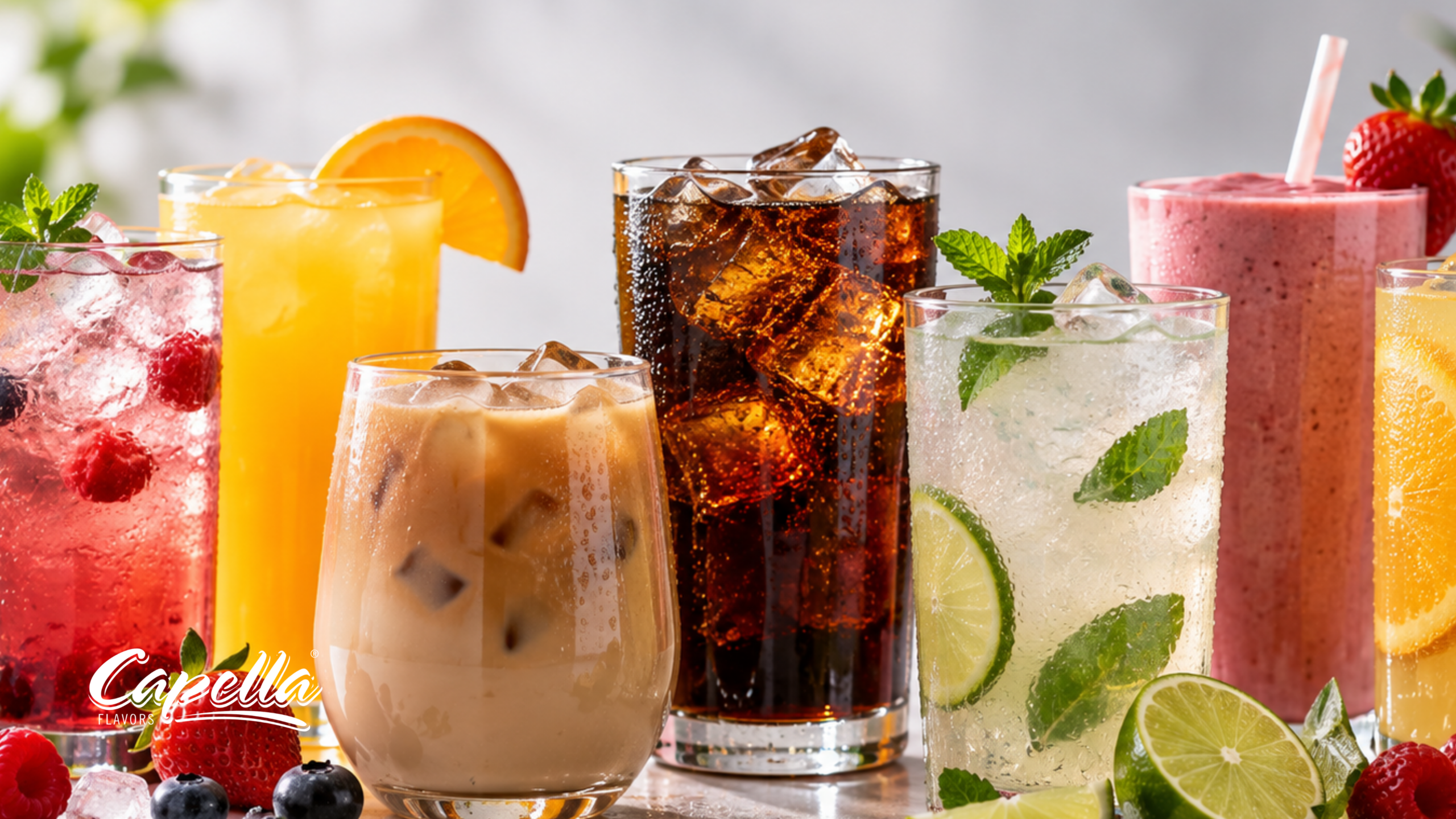
- Flavored water and sparkling beverages
- Carbonated soft drinks, energy drinks, and sports beverages
- Functional, tea-based, and coffee beverages
- Dairy and plant-based drinks
- Protein shakes, smoothies, and frozen beverages
- Mocktail-inspired drinks, concentrates, and mixes
Each application requires its own evaluation. A profile developed for sparkling water, for example, may need adjustment for a protein shake or creamy plant-based drink.
Balancing Flavor With Sweetness and Acidity
Flavor does not exist independently from the rest of the formula. Sweetness, acidity, aroma, and mouthfeel strongly influence the final sensory profile. A fruit flavor in a highly acidic beverage can create a very different experience from the same flavor in a sweeter formula.
The goal is not simply to maximize intensity, but to create a balanced beverage in which each sensory element supports the intended product experience.
Supporting Beverage Innovation With Flavor Concentrates
Flavor concentrates give manufacturers room to experiment with both familiar and unexpected combinations. A lemonade can gain strawberry, raspberry, peach, or tropical notes; sparkling drinks can combine citrus and berries; protein beverages can explore vanilla, caramel, or chocolate.
This flexibility supports seasonal concepts, limited editions, premium lines, and extensions of existing products—making flavor development an important part of innovation and differentiation.
How to Choose the Right Flavor Concentrate for a Beverage
No flavor concentrate performs exactly the same way in every formula. Developers should consider the beverage base, sweetness, acidity, carbonation, functional ingredients, processing conditions, desired intensity, and target sensory experience.
A flavor that works well in a still drink may require adjustment in a carbonated product or a formula containing proteins, botanicals, or plant-based ingredients. Testing different flavors, usage levels, and combinations within the full formulation remains essential.
The Role of Flavor in Beverage Product Differentiation
As beverage categories expand, brands need products that create a recognizable experience. Packaging, format, ingredients, functionality, and positioning all matter, but flavor is one of the most immediate ways consumers connect with a product.
A distinctive profile can strengthen a product concept, support line extensions, and turn flavor into part of the broader development strategy.
Conclusion: Better Beverage Formulation Starts With Thoughtful Flavor Development
Successful beverage development requires attention to flavor, aroma, sweetness, acidity, mouthfeel, base ingredients, and the complete sensory experience.
Flavor concentrates can improve beverage formulation by giving manufacturers flexibility to create, test, and refine profiles across a wide range of applications. From fruit and citrus to tropical, creamy, and dessert-inspired combinations, they support experimentation while helping formulate products with a clear flavor identity.
Explore Beverage Flavor Concentrates With Capella Flavors
Capella Flavors offers more than 250 flavor concentrates for manufacturers and product developers working across food and beverage applications. Explore fruit, citrus, tropical, creamy, dessert, confectionery, and beverage-inspired profiles for your next concept.
Whether you are developing a refreshing fruit drink, functional beverage, plant-based product, or an entirely new idea, Capella provides flavor possibilities to support creativity and product development.
Contact Capella Flavors to explore flavor solutions for your next beverage formulation.