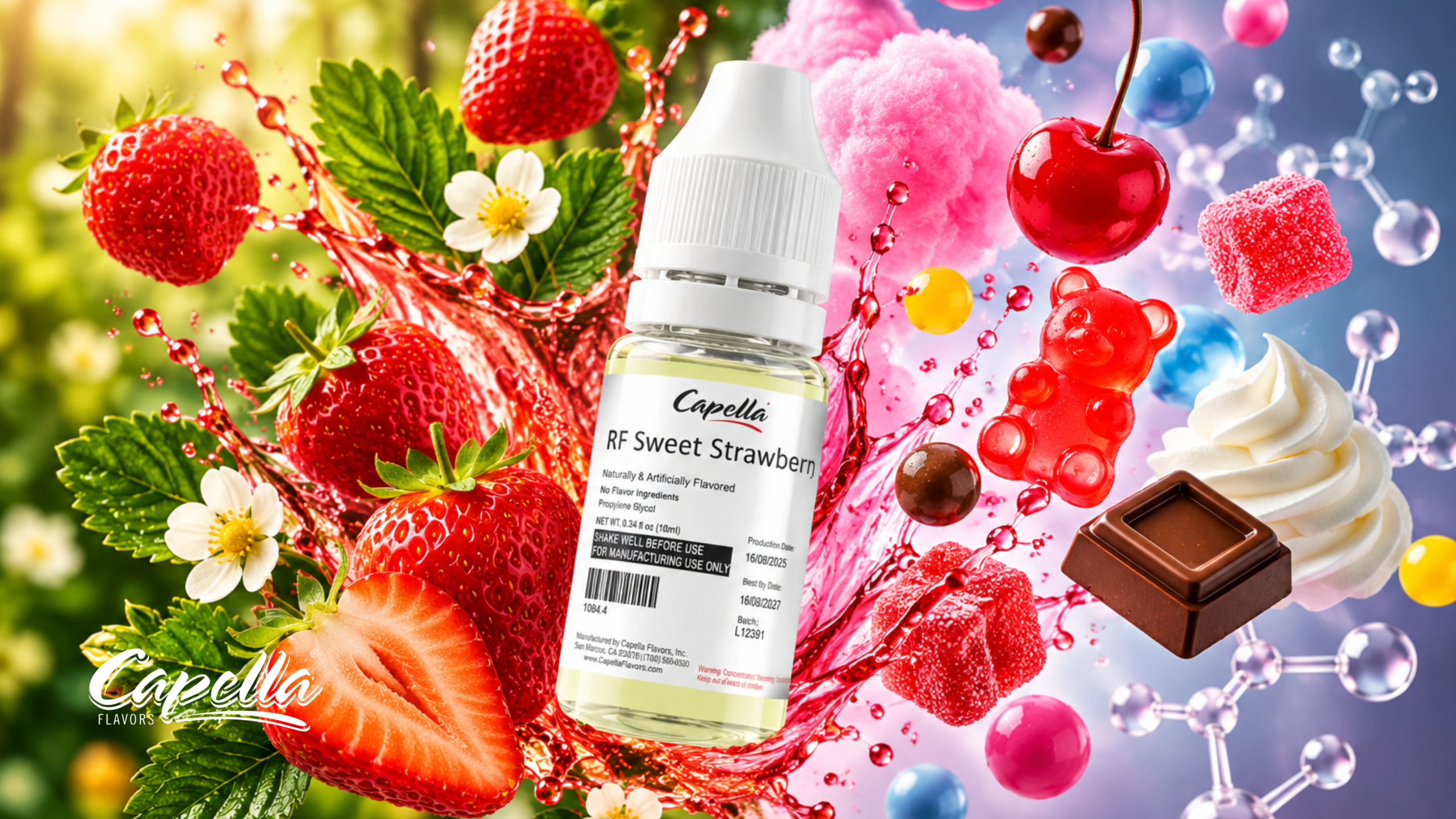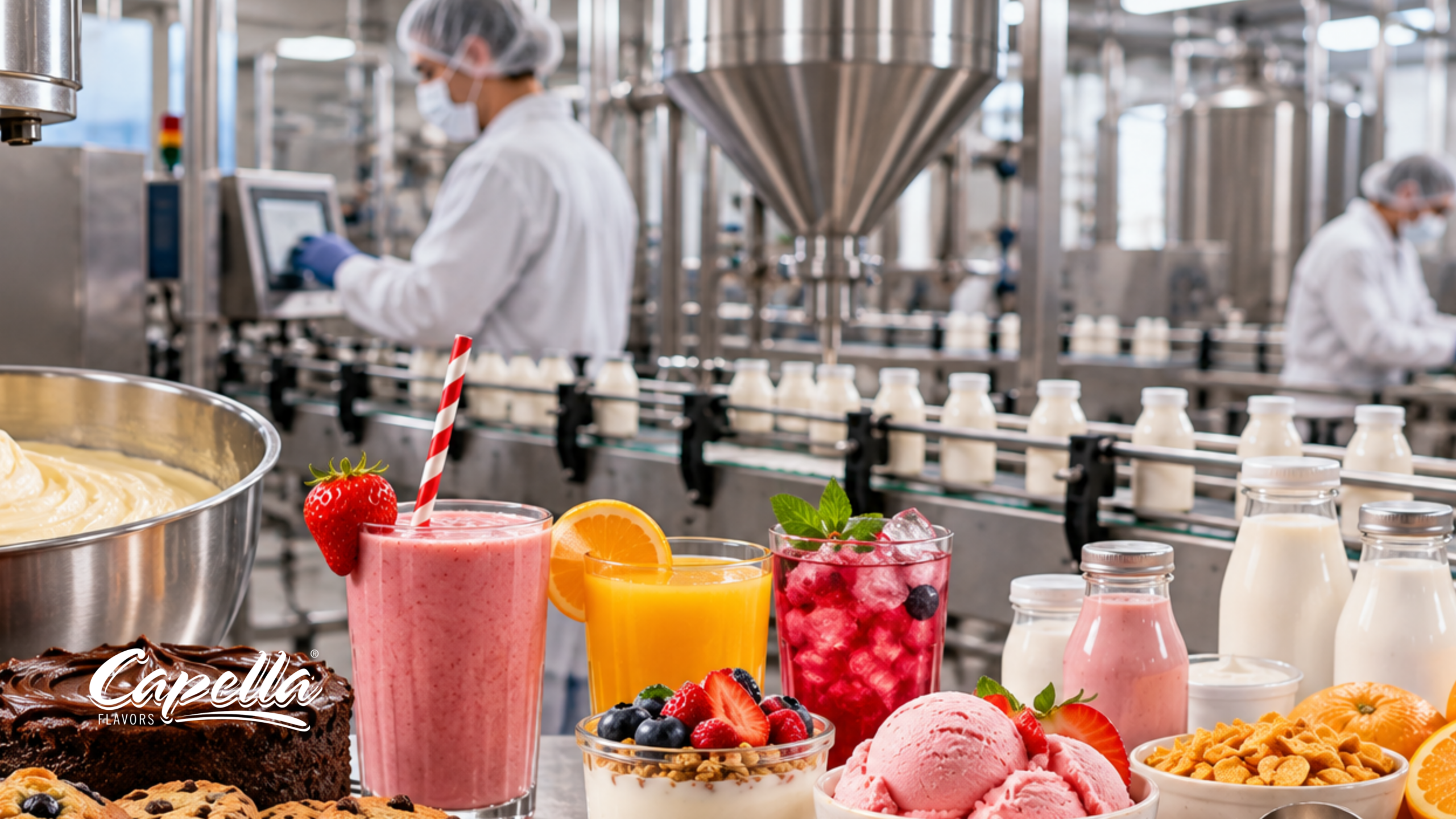
Food flavor concentrates are used across the food industry to help manufacturers and product developers create, refine, and differentiate flavor profiles in a wide variety of applications. From bakery products and confectionery to dairy, frozen desserts, beverages, and plant-based foods, flavor plays an important role in shaping the overall sensory experience of a finished product.
For food manufacturers, developing the right flavor profile involves more than selecting a familiar taste. Ingredients, processing methods, temperature, sweetness, texture, aroma, and the intended consumer experience can all influence how flavor is perceived.
Because food categories have different formulation requirements, understanding where and how flavor concentrates can be used is an important part of product development.
What Are Food Flavor Concentrates?
Food flavor concentrates are concentrated flavoring ingredients used to develop or enhance flavor profiles in food and beverage formulations.
Rather than approaching flavor as an isolated component, manufacturers can consider how a concentrate interacts with the complete product system.
A vanilla profile, for example, may perform differently in a baked product, frozen dessert, dairy application, or plant-based formulation. Likewise, fruit, citrus, creamy, dessert-inspired, and other profiles can create different sensory experiences depending on the ingredients and processing conditions involved.
This makes application testing an important part of flavor development.
Why Are Food Flavor Concentrates Important in Product Development?
Flavor is one of the key elements consumers experience when eating or drinking a product.
While appearance, aroma, and texture contribute to the overall experience, flavor can strongly influence how consumers perceive characteristics such as sweetness, freshness, richness, or indulgence.
For product developers, food flavor concentrates provide opportunities to explore different flavor directions without limiting development to a single category.
They can support familiar concepts, help create more distinctive combinations, or provide another tool for developing products designed around specific sensory experiences.
The challenge is selecting a flavor profile that complements the formulation rather than competing with it.
Food Flavor Concentrates for Bakery Products
Bakery is one of the most versatile areas for flavor development.
Cakes, cookies, muffins, brownies, donuts, pastries, frostings, fillings, and bakery mixes can support a wide range of flavor profiles.
Classic Bakery Profiles
Vanilla, chocolate, caramel, cinnamon, and creamy or dessert-inspired profiles can complement many traditional bakery concepts.
Vanilla, for example, may serve as the central flavor of a cake or cookie, but it can also support chocolate, fruit, caramel, and other flavors.
Fruit and Citrus Profiles
Strawberry, blueberry, raspberry, apple, peach, lemon, and orange profiles can introduce fruity or brighter characteristics to bakery products.
Manufacturers can also explore combinations such as lemon and vanilla, chocolate and raspberry, strawberry and cream, or apple and cinnamon.
Processing conditions should always be considered because baked applications expose flavor systems to heat.
Applications in Confectionery Products
Confectionery provides another broad platform for flavor innovation.
Flavor concentrates can be explored in products such as gummies, hard candies, chewy candies, chocolates, coatings, fillings, and other confectionery concepts.
Fruit and citrus profiles are common directions, while dessert-inspired, creamy, tropical, and more unconventional combinations can create additional possibilities.
For manufacturers developing functional confectionery products, flavor may have another important role: creating an enjoyable sensory experience within a formulation that may contain vitamins, minerals, botanical ingredients, or other functional components.
In these applications, the complete formulation needs to be evaluated because functional ingredients may contribute their own sensory characteristics.
Flavor Concentrates for Dairy Applications
Dairy products offer many opportunities for flavor development.
Yogurt, flavored milk, dairy beverages, cream-based desserts, puddings, and other applications can incorporate familiar or more innovative flavor profiles.
Fruit flavors can complement yogurt applications, while vanilla, chocolate, caramel, and dessert-inspired profiles may work across milk-based beverages and desserts.
The dairy base itself can influence flavor perception, so developers should evaluate concentrates within the actual formulation.
Fat content, sweetness, texture, acidity, and other ingredients can all affect the finished sensory experience.
Applications in Ice Cream and Frozen Desserts
Frozen products present unique formulation considerations because low temperatures can affect the way flavor and aroma are perceived.
Food flavor concentrates can be explored across applications such as ice cream, gelato, frozen yogurt, sorbet, popsicles, frozen bars, plant-based frozen desserts, and frozen beverages.
Classic profiles such as vanilla, chocolate, strawberry, and other fruits remain relevant, but manufacturers can also explore combinations inspired by desserts, confectionery, tropical fruits, or seasonal concepts.
Because frozen applications are consumed at low temperatures, testing flavor intensity and balance in the finished product is particularly important.
Food Flavor Concentrates in Beverage Development
Beverages represent another diverse area for flavor development.
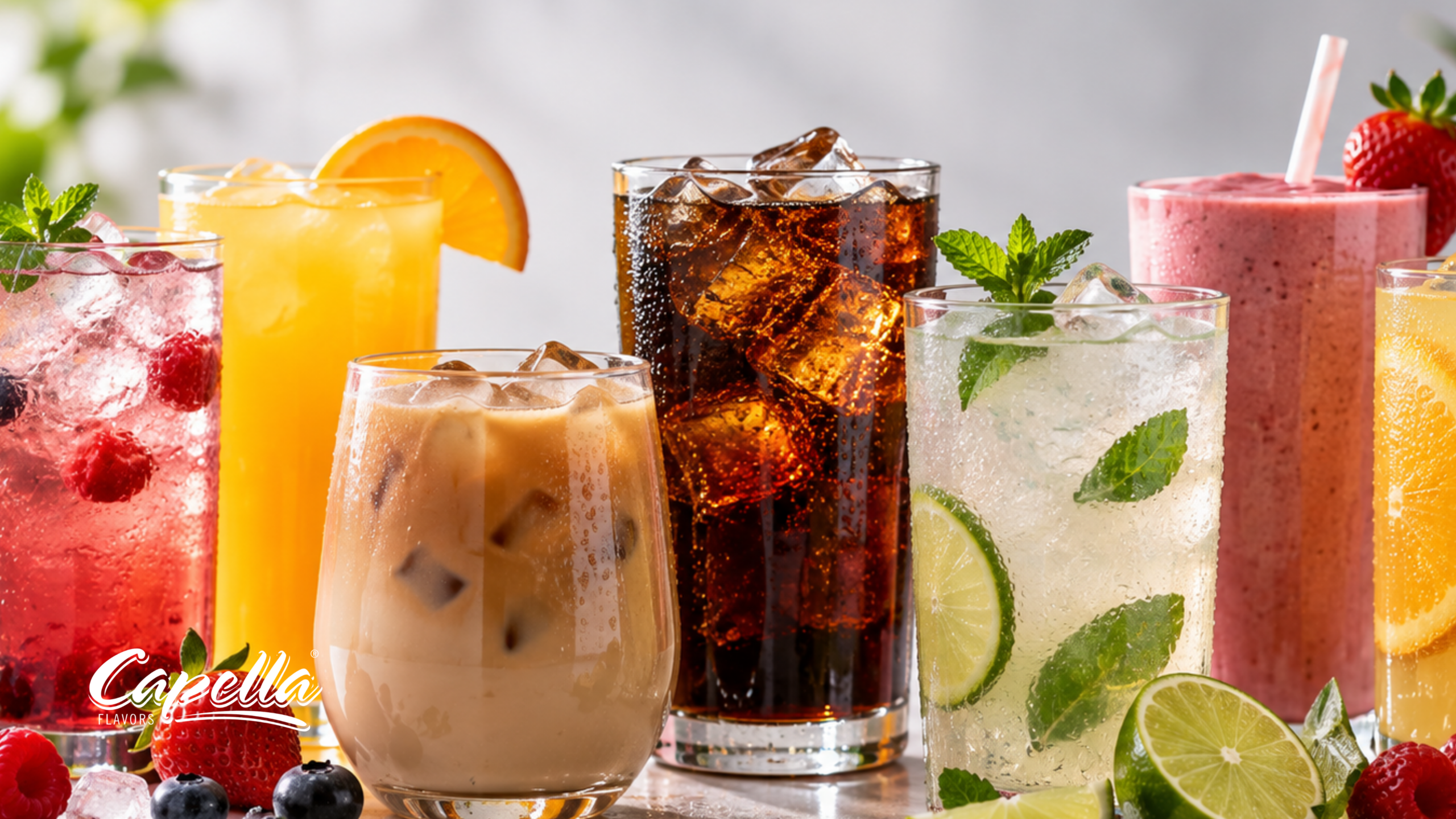
Flavor concentrates can be considered for still beverages, sparkling drinks, flavored waters, teas, lemonades, dairy-based beverages, plant-based drinks, functional beverages, and other concepts.
Fruit and Citrus Beverages
Profiles such as lemon, lime, orange, strawberry, peach, mango, and berry can support refreshing beverage concepts.
More Complex Beverage Concepts
Product developers can also combine multiple profiles to create more distinctive experiences.
Berry and citrus, peach and tea-inspired profiles, tropical fruit combinations, or creamy dessert-inspired beverages are examples of directions that can be explored.
The beverage base, sweetener system, acidity, carbonation, and other ingredients should be considered when evaluating the final flavor.
Flavor Applications in Plant-Based Foods
Plant-based product development can present different sensory challenges.
Alternative proteins, plant-based fats, grains, nuts, seeds, and other ingredients may contribute flavors that influence the final product.
For this reason, manufacturers should consider the complete ingredient system when selecting a flavor concentrate.
Depending on the application, vanilla, chocolate, fruit, creamy, dessert-inspired, or other profiles can be explored in plant-based beverages, frozen desserts, bakery products, protein-based foods, and other formulations.
The objective is not necessarily to approach every plant-based product in the same way as its conventional counterpart. Flavor can also be used to develop a distinctive identity specifically for the plant-based formulation.
Applications in Reduced-Sugar Food Products
Reducing sugar can affect more than sweetness.
Because sweetness interacts with aroma and flavor perception, changes to a sweetener system can influence the overall sensory experience of a food or beverage.
Flavor development therefore becomes an important consideration in reduced-sugar formulations.
Manufacturers should evaluate how the selected concentrate interacts with sweeteners, base ingredients, acidity, fat, texture, and other components.
The appropriate approach will vary according to the product category, making application testing essential.
Using Flavor Concentrates to Develop Seasonal Products
Seasonal product development gives manufacturers an opportunity to introduce new flavor experiences while working within familiar product formats.
A cookie, beverage, frozen dessert, or confectionery product can maintain its basic format while introducing a different flavor profile for a particular season or occasion.
Fruit and citrus profiles may support brighter concepts, while creamy, dessert-inspired, spice, caramel, or other richer profiles may be considered for more indulgent applications.
Seasonal development can also involve combining familiar flavors in new ways rather than relying on completely unfamiliar profiles.
Creating More Distinctive Flavor Combinations
Flavor innovation does not always require developing an entirely new type of product.
Sometimes, differentiation comes from how familiar flavors are combined.
Product developers might explore combinations such as:
- Strawberry and cream
- Chocolate and raspberry
- Lemon and vanilla
- Orange and chocolate
- Blueberry and vanilla
- Mango and citrus
- Apple and cinnamon
- Caramel and vanilla
- Tropical fruit combinations
- Berry and dessert-inspired profiles
The appropriate combination depends on the application, formulation, target consumer, and desired product positioning.
A flavor combination designed for a beverage may need to be approached differently when used in a cookie, gummy, yogurt, or frozen dessert.
How to Choose Food Flavor Concentrates for Different Applications
There is no single flavor concentrate or flavor profile that is ideal for every food product.
Manufacturers and product developers should begin by considering the intended application.
Important questions include:
What is the product category?
Bakery, beverages, confectionery, dairy, and frozen products each create different formulation environments.
How will the product be processed?
Baking, freezing, mixing, carbonation, and other processing conditions can influence the final sensory experience.
Which ingredients are already contributing flavor?
Fruits, cocoa, dairy ingredients, proteins, sweeteners, botanical ingredients, and plant-based components can all affect flavor perception.
What sensory experience is the product intended to deliver?
A product may be positioned as fruity, refreshing, creamy, indulgent, nostalgic, tropical, or innovative.
Will multiple flavor profiles be combined?
Layered concepts should be evaluated as complete systems rather than as individual flavors.
Answering these questions can help narrow the flavor directions that are most appropriate for further development and testing.
Why Testing in the Final Formulation Matters
Selecting a flavor from a catalog is only the beginning of product development.
The concentrate should be evaluated in the actual formulation because ingredients and processing conditions can change the way the final flavor is perceived.
Pilot testing can help developers evaluate flavor intensity, balance, aroma, sweetness, texture, and the interaction between different ingredients.
Different usage levels may also produce different sensory results.
Rather than evaluating flavor independently, manufacturers should consider whether the complete product delivers the intended experience.
Food Flavor Concentrates and Opportunities for Product Innovation
The versatility of food flavor concentrates allows manufacturers to explore applications across multiple areas of the food industry.
A fruit profile may inspire a beverage, bakery filling, gummy, yogurt, or frozen dessert. A dessert-inspired profile might be considered for cookies, beverages, confectionery products, or plant-based applications.
This cross-category flexibility can create opportunities for product developers to rethink familiar flavors and adapt them to new formats.
However, successful flavor development depends on understanding the complete formulation.
Application, ingredients, processing, target consumer, and desired sensory experience should all be considered when deciding how a particular flavor profile will be used.
Conclusion: Food Flavor Concentrates Across the Food Industry
Food flavor concentrates provide manufacturers and product developers with a versatile tool for creating and refining flavor profiles across the food industry.
From bakery and confectionery to dairy, frozen desserts, beverages, plant-based foods, and reduced-sugar formulations, each application presents its own sensory and formulation considerations.
The right flavor approach depends on the product itself. Processing conditions, ingredients, sweetness, texture, aroma, and consumer expectations can all influence the finished experience.
By evaluating flavor concentrates within the actual application and testing them as part of the complete formulation, manufacturers can explore new combinations, expand existing product lines, and develop more distinctive food and beverage concepts.
Explore Flavor Possibilities for Your Next Food Product
Developing a new food or beverage product and looking for the right flavor direction?
Capella Flavors offers a broad selection of flavor concentrates for manufacturers and product developers exploring applications across bakery, beverages, confectionery, frozen desserts, dairy, plant-based products, and other food categories.
Whether the concept calls for fruit, citrus, creamy, dessert-inspired, or more distinctive flavor combinations, the right starting point depends on the application and formulation.
Contact Capella Flavors to discuss flavor possibilities for your next product.