Food flavor concentrates are specialized ingredients used to create, enhance, and customize flavor profiles in food and beverage manufacturing. From beverages and baked goods to confectionery and frozen desserts, these concentrated flavoring solutions help manufacturers develop distinctive products and explore new possibilities.
As consumer preferences evolve, food manufacturers continue to seek ingredients that support innovation, consistency, and flexibility in product development.
Understanding how flavor concentrates work, where they can be applied, and what factors influence their performance is essential for creating successful food and beverage formulations.
What Are Food Flavor Concentrates?
Food flavor concentrates are concentrated flavoring preparations designed to deliver specific taste and aroma characteristics when incorporated into suitable food and beverage products.
Unlike ingredients primarily used to provide sweetness, texture, or nutritional value, flavor concentrates are selected for their sensory properties.
They can offer a wide range of flavor profiles, including:
- Fruit-inspired flavors such as strawberry, mango, and raspberry.
- Dessert-inspired profiles such as vanilla, caramel, and custard.
- Beverage-inspired flavors.
- Sweet and confectionery-inspired profiles.
- Complex flavor combinations for specialized applications.
Because these ingredients are concentrated, they are generally incorporated into formulations in relatively small quantities.
However, the appropriate usage level depends on the specific concentrate, the intended application, and the desired flavor intensity.
How Are Food Flavor Concentrates Used in Manufacturing?
Food flavor concentrates can be incorporated into different stages of product development and manufacturing, depending on the formulation and processing requirements.
Manufacturers typically begin by identifying the desired flavor profile and evaluating concentrates that may be suitable for the intended application.
The development process may include:
- Selecting a flavor profile that matches the product concept.
- Evaluating compatibility with the formulation.
- Testing different usage levels.
- Assessing flavor performance during processing.
- Conducting sensory evaluations.
- Refining the formulation before commercial production.
Because processing conditions and ingredient interactions can affect flavor performance, manufacturers should test concentrates within the finished product formulation.
Food Flavor Concentrates in Beverage Manufacturing
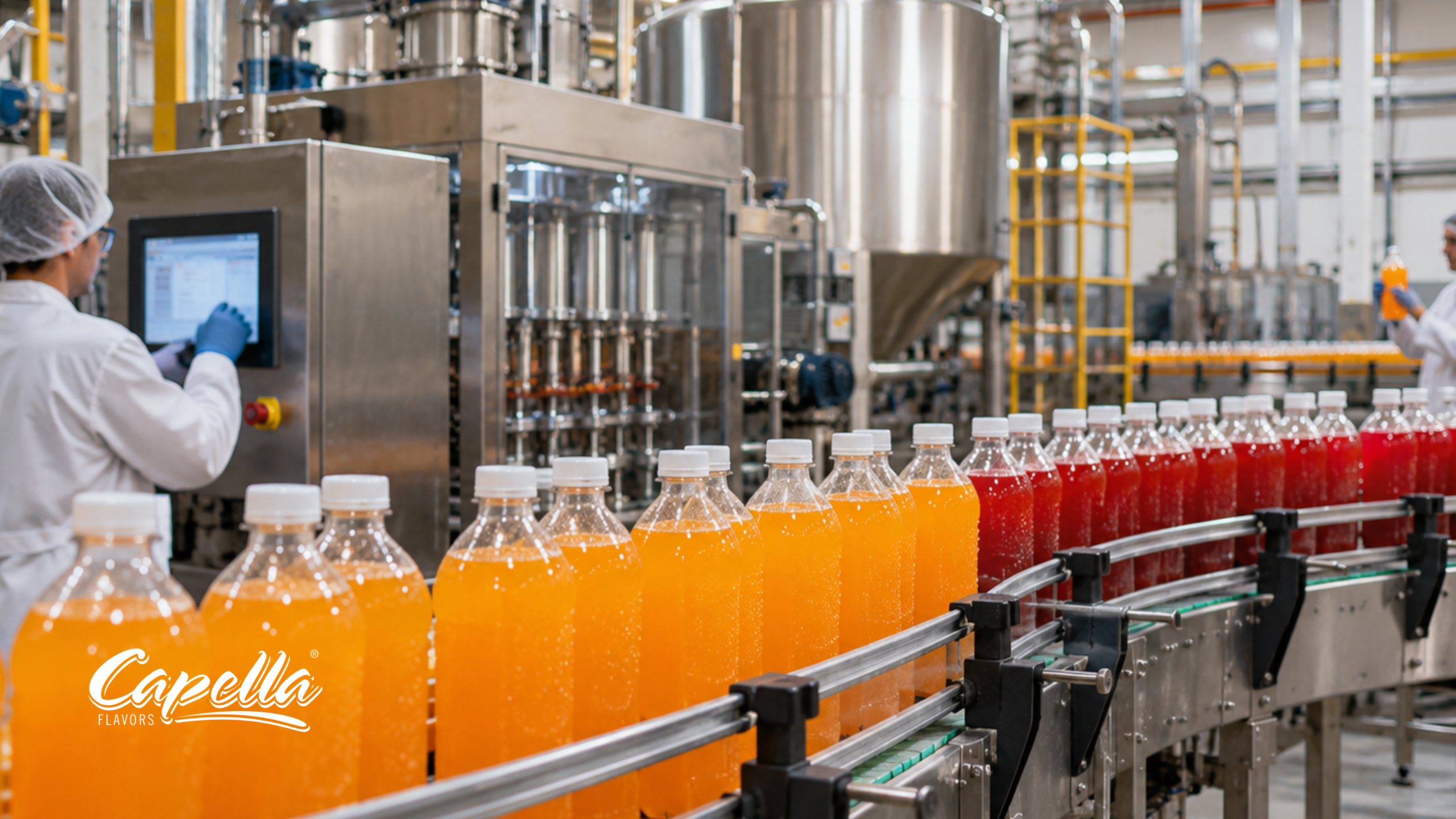
Beverage development is one of the many applications in which flavor concentrates can be useful.
Manufacturers may explore different flavor profiles for compatible beverage formulations, including:
- Flavored waters.
- Soft drinks.
- Beverage syrups.
- Specialty beverages.
- Drink mixes.
- Certain dairy-based beverages.
Fruit-inspired flavors can contribute refreshing characteristics, while vanilla, caramel, and other dessert-inspired profiles may complement richer beverage concepts.
However, factors such as solubility, acidity, processing temperature, and ingredient compatibility must be considered.
Testing helps manufacturers determine whether a flavor concentrate performs as expected in the finished beverage.
Flavor Concentrates for Bakery and Dessert Products
Flavor concentrates can also support creativity in bakery and dessert manufacturing.
Depending on their technical characteristics and suitability, they may be evaluated in products such as cakes, cookies, pastries, fillings, frostings, and other desserts.
For example, vanilla and caramel profiles can complement sweet baked goods, while fruit-inspired flavors may introduce additional sensory dimensions.
Manufacturers should consider how processing temperatures affect flavor performance.
Some flavoring components may be sensitive to heat, making application testing important when developing products that undergo baking or other thermal processes.
Flavor Concentrates in Confectionery Manufacturing
Confectionery manufacturers frequently explore distinctive flavor combinations to create appealing products.
Flavor concentrates may be evaluated for compatible applications such as candies, gummies, confectionery fillings, and other sweet products.
Fruit-inspired flavors are commonly explored in confectionery development, while dessert-inspired profiles can offer opportunities for more complex combinations.
However, confectionery manufacturing involves specific technical considerations.
Temperature, acidity, moisture, and ingredient interactions may influence the stability and sensory performance of a flavor.
Selecting the appropriate concentrate and testing it under actual production conditions are important steps in product development.
Food Flavor Concentrates in Dairy and Frozen Desserts
Dairy products and frozen desserts offer additional opportunities for flavor innovation.
Flavor concentrates may be evaluated in compatible formulations for ice cream, yogurt, frozen desserts, and other dairy-based products.
Popular flavor directions include vanilla, caramel, fruit-inspired profiles, and dessert combinations.
However, the fat content, protein composition, and temperature of dairy products can influence flavor perception.
A flavor that performs well in a beverage may behave differently in ice cream or yogurt.
Manufacturers should evaluate the concentrate under the intended production, storage, and consumption conditions.
What Are the Benefits of Using Food Flavor Concentrates?
Food flavor concentrates can offer several advantages during product development and manufacturing.
Consistent Flavor Profiles
Standardized flavoring ingredients can help manufacturers work toward consistent sensory characteristics across production batches.
Accurate dosing, ingredient handling, and production controls remain essential for achieving reliable results.
Greater Formulation Flexibility
Flavor concentrates provide opportunities to explore different taste profiles without relying exclusively on large quantities of corresponding whole-food ingredients.
This flexibility can be useful when developing new products or adjusting existing formulations.
Product Innovation
Flavor concentrates allow manufacturers to experiment with familiar and unexpected combinations.
They can support the development of seasonal products, limited-edition varieties, and new additions to an existing product portfolio.
Efficient Ingredient Usage
Because flavor concentrates are designed to deliver flavor at relatively low usage levels, they may offer practical advantages in formulation and ingredient handling.
Actual efficiency depends on the product, recommended concentration, cost, and manufacturing requirements.
How to Choose the Right Food Flavor Concentrates
Selecting the appropriate flavor concentrate involves more than choosing an appealing flavor.
Manufacturers should evaluate several factors before incorporating a concentrate into commercial production.
Application compatibility: Confirm that the flavor is suitable for the intended food or beverage product.
Processing conditions: Consider temperature, acidity, moisture, and other manufacturing requirements.
Flavor stability: Evaluate whether the desired sensory characteristics remain consistent throughout processing and storage.
Regulatory compliance: Review applicable food safety and labeling requirements for the intended market.
Technical documentation: Consider available product specifications and relevant application guidance.
Sensory performance: Test the concentrate within the complete formulation to determine the most appropriate usage level.
These considerations help manufacturers make informed ingredient decisions and develop products that meet their formulation objectives.
Exploring Flavor Innovation with Capella Flavors
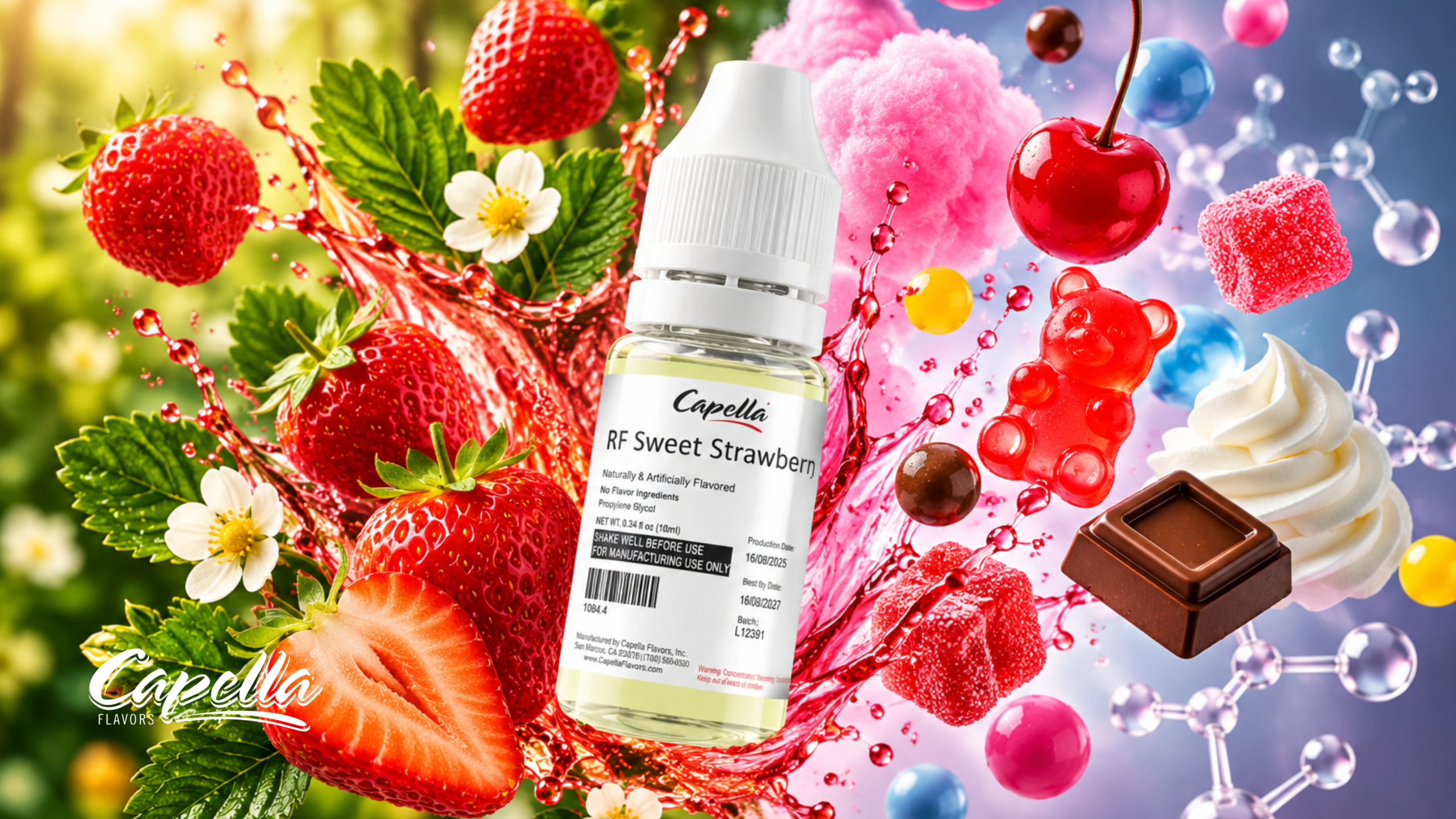
Capella Flavors offers a diverse collection of flavor concentrates that can inspire food and beverage product development.
With more than 250 flavor options, manufacturers and product developers can explore a wide variety of profiles, from familiar fruit flavors to dessert-inspired combinations.
Whether developing a new beverage, experimenting with confectionery concepts, or exploring flavor possibilities for baked goods, selecting the right concentrate begins with understanding the intended application.
Capella’s extensive flavor collection provides opportunities to discover different sensory directions and explore creative combinations.
Manufacturers should review product-specific information and confirm suitability for their intended applications before commercial use.
Conclusion
Food flavor concentrates play an important role in modern food and beverage manufacturing by helping businesses develop distinctive flavor profiles and explore new product possibilities.
From beverages and bakery products to confectionery and frozen desserts, these ingredients can support a wide range of compatible applications.
However, successful flavor development requires careful consideration of formulation requirements, processing conditions, sensory performance, and regulatory compliance.
By understanding how flavor concentrates work and evaluating their performance within finished products, manufacturers can make more informed decisions and create memorable flavor experiences.
Discover Flavor Solutions with Capella Flavors
Looking to explore new flavor possibilities for your next food or beverage product?
Capella Flavors offers an extensive selection of flavor concentrates to inspire creativity and support the exploration of different flavor profiles.
Contact Capella Flavors to learn more about flavor solutions for your next food or beverage creation.
See Our Full Catalog to explore available flavor profiles and discover new possibilities for your manufacturing projects.